



How to Make Health and Fitness a Hobby
Introduction
How to Make Health and Fitness a Hobby is a question more people are asking as gym memberships go unused and New Year resolutions quietly fade by February. Most people don’t quit exercise because of lack of discipline. They quit because they never actually enjoyed it. Willpower can carry you through the first few weeks, but it rarely survives long term. Fortunately, research on motivation and habit formation points to a better path. Instead of forcing yourself through workouts, you can build a relationship with movement the same way people fall in love with hobbies like cooking, photography, or music. This guide breaks down exactly how to do that, using real findings from exercise psychology, so fitness becomes something you look forward to instead of something you dread.
Most people don’t quit exercise because they are not disciplined. They quit because they’ve built their entire fitness life on willpower, and willpower is a terrible long-term business partner. It shows up strong in January and quietly resigns by March.
Here’s the reframe that actually holds up under research: the people who stay active for decades rarely describe it as “sticking to a routine.” They describe it the way a woodworker talks about their shop, or a home cook talks about their kitchen — as something they’re a little obsessed with. A hobby.
This isn’t just a nice metaphor. It maps onto real psychology. Below is a science-backed blueprint for turning fitness from an obligation into something you genuinely look forward to.
1. Why “Hobby” Beats “Habit” and “Discipline”
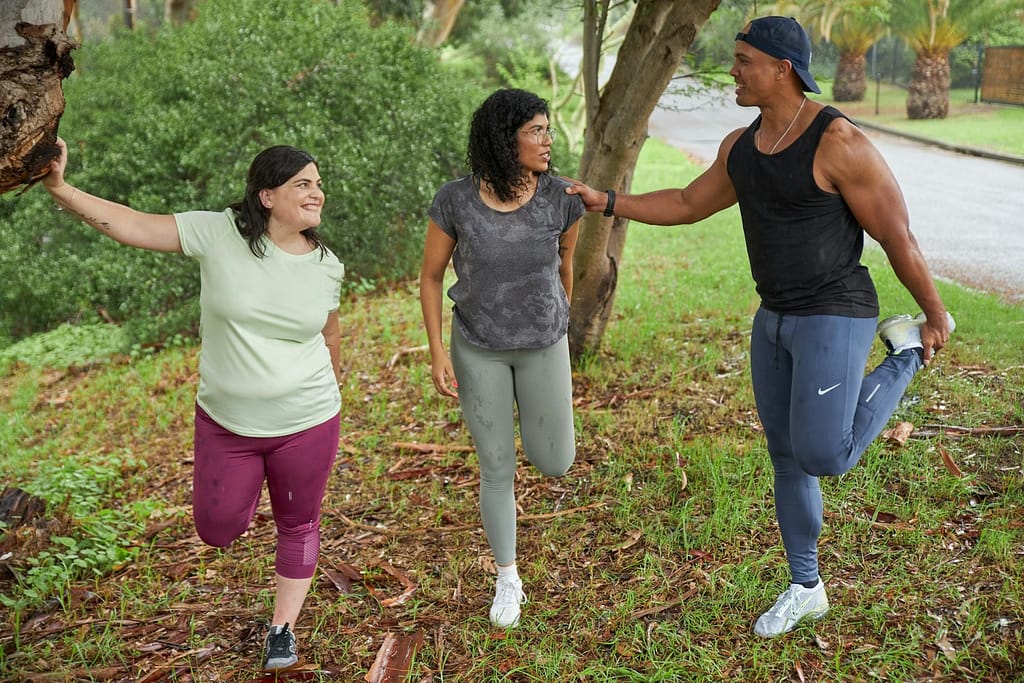
Habits run on repetition until behavior becomes automatic. Discipline runs on willpower, which is a finite resource on any given day. Hobbies run on something more durable: intrinsic motivation — doing a thing because it’s satisfying in itself, not because you’re gritting your teeth toward an outcome.
This distinction has a name in psychology. It is called Self-Determination Theory (SDT), which was developed by Edward Deci and Richard Ryan. Decades of research in exercise contexts point to the same three psychological needs driving whether physical activity feels enjoyable and sustainable. They are associated with autonomy (you feel like you’re choosing this), competence (you feel like you’re getting better at it), and relatedness (you feel connected to others through it). Environments that support all three tend to produce people who exercise because they want to, not because they’re told to.
A large systematic review of exercise motivation research found something worth sitting with. It identified motivation (exercising because you value the health outcome) tends to get people started, but intrinsic motivation, that is, exercising because it’s enjoyable, because you’re improving a skill, because it’s exciting is the stronger predictor of whether people are still doing it years later. In other words, the outcome gets you in the door. The fun keeps you in the building.
That’s the entire thesis of this piece: stop trying to out-discipline your way into fitness, and start trying to out-enjoy your way into it.
2. Shift Your Identity Before You Shift Your Schedule
“I have to work out” and “I’m someone who trains” are not the same sentence, even though they can describe identical behavior. One is a task on a list. The other is a fact about who you are, because facts about who you are don’t need to be re-negotiated every morning.
Try writing one sentence right now: “I’m the kind of person who ___.” Runs before work. Lifts twice a week. Tries a new sport every season. It doesn’t need to be true yet. Identity-based change tends to work in the opposite direction — you act like the person first, and the belief catches up.
3. Give Yourself a “Sampling Phase”
Nobody falls in love with their first hobby attempt. Cooks burn things. Photographers take blurry shots. Give yourself the same grace with movement: a deliberate stretch of weeks where your only job is to try things, not commit to them.
Rotate through climbing, lifting, swimming, martial arts, dance, hiking, cycling, team sports. Keep a simple note of what you enjoyed — not what “worked,” not what burned the most calories, just what you’d want to do again. This matters more than it sounds, because research consistently finds that positive affect during exercise, whether a session actually felt good in the moment and strongly predicts whether the behavior turns into a lasting habit. Sessions that feel monotonous or unpleasant tend to fail to stick, no matter how disciplined the plan looks on paper.
4. Chase Competence, Not Just the Scale – How to Make Health and Fitness a Hobby
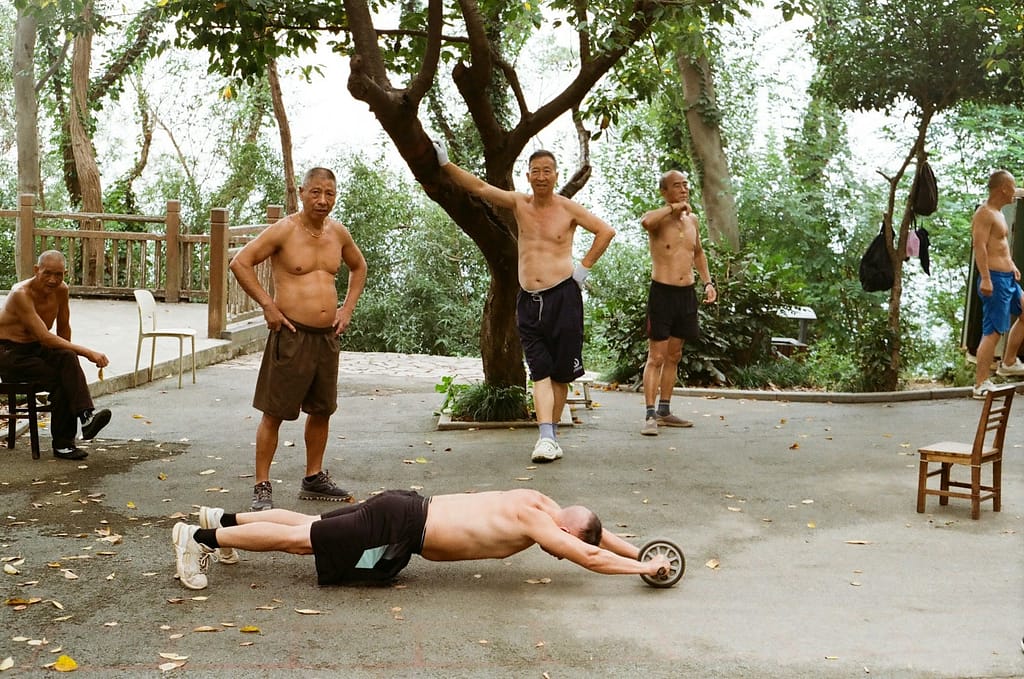
Hobbyists get hooked on getting better at something. A guitarist doesn’t practice scales to lose weight; they practice because the progress itself feels good. Fitness offers the exact same hook if you let it. It’s like a 5K time to chip away at, a pull-up to finally get, a yoga pose you couldn’t do three months ago.
Competence satisfaction is one of the three core needs identified across exercise-motivation research as consistently predicting participation — across different populations, settings, and study designs. Track a skill, not just a number on a scale. The scale is a lagging indicator of a life; a skill is something you can watch improve week to week.
5. Build the Environment Like a Hobbyist Would
Photographers buy the lens. Cooks build the spice rack. Hobbies get physical space and gear devoted to them, and that investment isn’t vanity. It lowers the friction of starting and signals to your own brain that this thing matters.
- First, keep a gym bag permanently packed
- Second, buy the shoes or gear for the activity you actually enjoyed in your sampling phase
- Third, carve out a literal corner, shelf, or drawer that’s “yours” for this
- Fourth, build a playlist or podcast queue reserved only for training
None of this is required to exercise. That’s the point — hobbies aren’t built on what’s required.
6. Find Your People – How to Make Health and Fitness a Hobby

This is one of the more reliable findings in the exercise-adherence literature. Social connectedness and group cohesion predict who shows up and who quietly disappears. Studies of community-based group exercise programs — some tracking adherence rates well above 65% over a full year, repeatedly point to the same theme. People stay because they feel like they belong to something, not because the workout itself is exceptional.
You don’t need a formal class. A standing walk with a friend, a lifting partner, a run club, or even an online community built around a shared training goal all tap into the same mechanism. Hobbies are rarely solitary for long, therefore, find or build the version of that for movement.
7. Learn About It the Way You’d Learn Any Craft

Hobbyists read. They watch. They nerd out on the history and mechanics of their pursuit. Do the same here, not because you need a nutrition degree, but because curiosity-driven learning is intrinsically rewarding in a way that obligation-driven learning never is. Read about training methodology. Follow a coach whose approach interests you and understand why a lift or a drill works. Understanding tends to deepen engagement rather than dilute it.
8. Expect the Early Weeks to Feel Effortful — That’s Normal
One of the most-cited studies on habit formation, led by Phillippa Lally at University College London, tracked 96 people building a new daily behavior for twelve weeks. The average time to reach automaticity — the point where a behavior stops requiring conscious willpower, was 66 days, with a huge range from as little as 18 days to as long as 254. This depends on the complexity of the behavior and the person.
The takeaway isn’t “just push through 66 days.” It’s this: research following new gym members found that showing up around four times a week for at least six weeks tends to be the rough threshold where attendance stops depending on conscious planning and starts running on contextual cues — the gym bag by the door, the time slot on the calendar. Give the process months, not days, and don’t read an effortful week three as evidence that this isn’t working.
9. Vary the Practice to Avoid Burnout – How to Make Health and Fitness a Hobby
Hobbies evolve. A cook doesn’t make the same dish for twenty years; they branch into new cuisines. Rotate your training seasonally. For example: a strength block in winter, hiking in spring, a new sport in summer. Novelty isn’t a distraction from progress; it’s part of what keeps a pursuit feeling like a pursuit rather than a sentence.
10. Detach from Outcome-Only Thinking
A golfer has bad rounds. A painter has pieces that don’t work. Nobody quits golf or painting over a single bad session, because the outcome was never the entire point of showing up. Apply the same logic here: a workout that felt sluggish or a week that didn’t go as planned is variance, not failure. Aesthetic and health outcomes are real and worth wanting, but treating them as the only measure of a “good” session is a fast route back to feeling like fitness is a chore you’re failing at.
11. Revisit and Personalize as You Go – How to Make Health and Fitness a Hobby
Hobbies aren’t static, and neither should your training be. Every few months, look back at what you’ve enjoyed, what you’ve dreaded, and what you’re curious to try next. Rewrite your identity statement if it needs updating. The version of “fitness as a hobby” that works for you at year one may look nothing like the version at year five, and that’s exactly how a real hobby is supposed to behave.
The Bottom Line – How to Make Health and Fitness a Hobby
The research points to a consistent story: people don’t sustain exercise because they have more discipline than everyone else. They sustain it because somewhere along the way, it stopped being something they were forcing and started being something they were curious about. It’s like a pursuit with its own community, its own small mastery wins, and its own room to explore.
You don’t need to fall in love with fitness overnight. You just need to give yourself permission to treat it like you’d treat any other hobby. Treat it as something you’re allowed to be a beginner at, get curious about, and come back to. You should not do it because you have to, but because you want to see what’s next.
Pick one small, low-stakes thing to try this week. That’s how every hobby actually starts.
Selected Sources
- Deci, E. L., & Ryan, R. M. — Self-Determination Theory
- Teixeira, P. J., et al. (2012). Exercise, physical activity, and self-determination theory: A systematic review. International Journal of Behavioral Nutrition and Physical Activity.
- Lally, P., van Jaarsveld, C. H. M., Potts, H. W. W., & Wardle, J. (2010). How are habits formed: Modelling habit formation in the real world. European Journal of Social Psychology.
- Kaushal, N., & Rhodes, R. E. (2015). Exercise habit formation in new gym members.
- Weyland, S., et al. (2020). Affective responses and habit strength in exercise.
- Killingback, C., Tsofliou, F., & Clark, C. (2017). Older people’s adherence to community-based group exercise programmes. BMC Public Health.

Post navigation
Previous Post
 How to lose weight without going to the gym
