


Introduction
Rewire Your Brain: The Secret to a Longer Life. Most people think fitness is about muscles and heart rate. They’re missing half the equation. Your brain, your breath, and your body form one connected system. Integrated mind-body workouts like yoga, tai chi, and dance harness this connection. And science proves they might be the most powerful longevity tool you’re not using.
These practices combine physical movement, mindfulness, and controlled breathing. They don’t just build strength or flexibility. Firstly, they reshape your brain. Secondly, they lower stress at the cellular level. Thirdly, they protect your memory as you age. The evidence is compelling.
Let’s explore what integrated mind-body workouts really do—and why the science says you should start today.
What Are Integrated Mind-Body Workouts, Exactly?
Integrated mind-body workouts are multi-component exercises. They highlight the harmony of physical movement, mindfulness, and controlled breathing. Examples include yoga, tai chi, Baduanjin, Qigong, and even certain forms of dance.
Unlike conventional exercise, these practices demand more than just physical effort. They require coordinated engagement of movement, balance, breath control, and sustained attention. This combination is key. It creates a unique stimulus for your brain that pure aerobic or resistance training doesn’t offer.
Mind-Body Exercises Are Classified as Multi-Component Exercise
Research classifies mind-body exercises as multi-component exercise. This means they target multiple aspects of fitness simultaneously. You’re building strength, improving balance, and boosting cognitive function all at once. A 16-week intervention study found that both single-modality mind-body exercise and multicomponent interventions (integrating mind-body with aerobic training) effectively enhanced active aging outcomes in adults aged 50-75. However, the multi-component approach showed superior efficacy for comprehensive benefits.
Why Integrated Mind-Body Workouts Outperform Traditional Exercise for Brain Health
When it comes to cognitive protection, not all exercise is equal. A landmark systematic review and meta-analysis of 26 randomized controlled trials (2,555 participants) compared mind-body exercise to structured aerobic exercise in older adults with mild cognitive impairment. The results were stunning.
Mind-Body Exercise Shows Superior Cognitive Benefits-Rewire Your Brain: The Secret to a Longer Life
Mind-body exercise significantly improved MMSE scores (mean difference = 1.27), MoCA scores (mean difference = 1.89), and ADAS-Cog scores (mean difference = -2.09) versus controls. Meanwhile, structured aerobic exercise showed non-significant effects on MMSE and MoCA.
The conclusion was clear: “Mind-body exercise demonstrates superior cognitive benefits compared with structured aerobic exercise in older adults with MCI”. The optimal parameters for these benefits? At least 20 weeks duration, 60 minutes per session, and 3 times per week.
Protecting Brain Structure Through Neuroplasticity
How does this work? Mind-body exercise promotes neuroplasticity. It increases gray matter volume in regions responsible for attention control, working memory, and emotional regulation. Specifically, regular practice boosts volume in the prefrontal cortex and hippocampus.
Even more impressive, mind-body exercise fosters interhemispheric connectivity in the brain, bolstering neural activation in motor, sensory, and cognitive regions. Tai Chi enhances functional network plasticity and cognitive flexibility, with improved “small-world properties” and enhanced network resilience compared to non-practice control groups. Your brain literally becomes more adaptable and resilient.
The 5 Best Ways to Build an Integrated Mind-Body Practice- Rewire Your Brain: The Secret to a Longer Life
Ready to start? Here are five evidence-backed approaches.
Yoga for Stress Reduction and Quality of Life

Yoga is perhaps the most researched mind-body practice. A systematic review of 33 randomized controlled trials (2,384 participants) found moderate-certainty evidence that yoga improves gait speed and lower extremity strength compared to inactive control groups. It also reduces BMI and inflammatory cytokine levels. A Frontiers in Aging study concluded that yoga significantly improves quality of life and cognitive function in Alzheimer’s patients, with reductions in depressive symptoms and enhanced social engagement.
Tai Chi for Cognitive Flexibility and Emotional Regulation
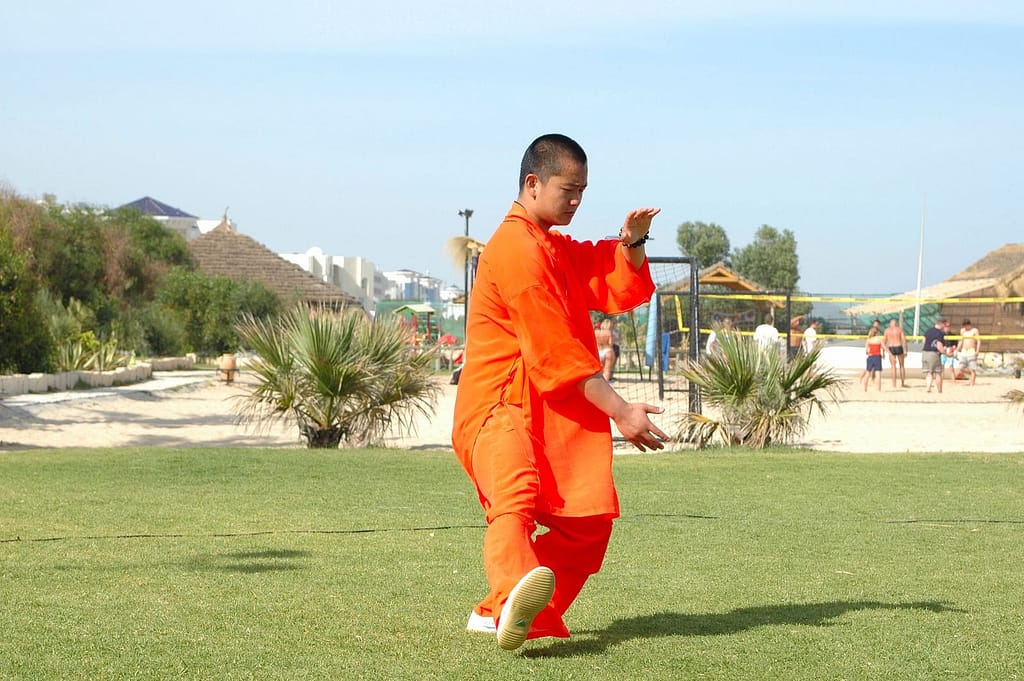
Tai Chi combines slow, deliberate movements with focused attention and controlled breathing. It improves functional network plasticity and cognitive flexibility. Research also shows Tai Chi enhances functional connectivity in the cognitive control network, which is associated with better executive function. Tai Chi practitioners also show experience-dependent brain specialization, with increased regional homogeneity and enhanced functional specificity.
Baduanjin (Chinese Qigong) for Frailty and Sarcopenia
Baduanjin is a form of Qigong involving eight gentle movements. It has shown promise in improving cognitive frailty and oxidative stress markers in older adults. A systematic review found that mind-body exercise like Baduanjin yields comparable benefits to resistance training for older adults with frailty, with significant improvements in muscle strength and function.
Dance for Social Connection and Brain Health-Rewire Your Brain: The Secret to a Longer Life

Dance combines complex, coordinated movement with music and often social interaction. This combination is uniquely powerful. Dance promotes neuroplasticity, increases volume of brain regions like the hippocampus and cingulate cortex, and fosters interhemispheric connectivity. Emerging research on online multimodal mind-body interventions integrating music, dance movement, and mindfulness shows high feasibility and safety for older adults.
Online Multimodal Interventions for Accessibility
Technology is making mind-body practice more accessible. A recent pilot randomized controlled trial tested a 6-week online multimodal mind-body group intervention delivered via video conferencing to healthy older adults. Adherence was high at 80%, exceeding the predefined benchmark. The intervention was feasible and safe, with 95% reach and 90% retention.
How Fast Can You See Results- Rewire Your Brain: The Secret to a Longer Life
Mind-body practice rewards patience. A 16-week intervention study showed significant improvements in both subjective and objective measures of active aging, including lung capacity, flexibility, and balance. Some benefits appear even sooner. Yoga and tai chi improve physical function, even in already frail populations. Emerging evidence suggests they may modulate cellular and molecular hallmarks of aging, especially inflammation.
Stress Resilience Through Epigenetic Changes
Mind-body exercise acts at the molecular level. It induces epigenetic modifications of stress-regulated genes like NR3C1 and FKBP5. It also alters glucocorticoid receptor expression in the hippocampus and reconfigures stress-processing neural circuits. This promotes greater stress resilience and facilitates homeostasis restoration throughout the lifespan.
Quality of Life and Mental Wellbeing-Rewire Your Brain: The Secret to a Longer Life
Beyond cognitive protection, the benefits extend to quality of life. Yoga and tai chi improve mood, sleep, and social engagement. Mind-body therapies likely confer resilience by positively impacting core systems for maintaining homeostasis, including musculoskeletal, metabolic, and stress-response systems. The growing popularity of yoga alone—from 5% in 2012 to 15.8% in 2022 among US adults—suggests people are discovering these benefits firsthand.
Track Your Mind-Body Practice Progress-Rewire Your Brain: The Secret to a Longer Life
Measuring progress in mind-body practice is different from tracking reps or miles. It’s more holistic.
Monitor Cognitive and Mood Changes- Rewire Your Brain: The Secret to a Longer Life
Use simple self-assessments. Rate your memory, attention, and mood weekly. Research shows mind-body exercise significantly improves cognitive test scores within weeks. Depression symptoms also typically decrease.
Track Physical Function and Balance- Rewire Your Brain: The Secret to a Longer Life
Measure your flexibility, balance, and gait speed monthly. Studies show improvements in lower extremity strength and gait speed in yoga practitioners compared to inactive controls. Balance improves within 8 to 16 weeks of consistent practice.
Use Wearable Tech to Monitor Stress Markers-Rewire Your Brain: The Secret to a Longer Life

Wearables can track heart rate variability (HRV) and sleep quality. Mind-body practice reduces stress responses, which may be reflected in improved HRV scores. Better sleep quality is another commonly reported benefit.
Final Thoughts: Move with Intention, Live with Purpose
Integrated mind-body workouts are more than exercise. Firstly, they’re a comprehensive brain-health intervention. Secondly, they build muscle and sharpen memory. Thirdly, they lower stress and improve mood. Lastly, they protect you from cognitive decline and frailty.
The science is robust. A systematic review concluded that mind-body exercise demonstrates “superior cognitive benefits compared with structured aerobic exercise in older adults with MCI”. These practices induce “neuroplasticity through the dynamic interaction of sensory perception, motor execution, and cognitive processing”. They are safe, accessible, and increasingly popular—and they work.
So, roll out a yoga mat. Join a virtual tai chi class. Put on music and dance. Your future self—your sharper, calmer, stronger future self—will thank you.
Disclaimer: This article is for informational purposes only and does not constitute medical advice. Always consult your healthcare provider before beginning any new exercise program, especially if you have pre-existing conditions or are over 40.
Scientific References
- Yoga and Cognitive Function in MCI & AD. Frontiers in Aging, 2025
- Mind-Body vs. Aerobic Exercise for MCI: Systematic Review & Meta-Analysis. Medicine (Baltimore), 2026
- Mind-Body Exercise for Frailty & Sarcopenia: Systematic Review & Meta-Analysis. Journal of Cachexia, Sarcopenia and Muscle
- Mind-Body Exercise as Epigenetic Modulators: Rewiring Neural Circuits. ScienceDirect, 2026
- Redox Regulation in Aging Muscles: Exercise as a Key Modulator. Frontiers in Cell and Developmental Biology, 2026
- Mind-Body vs. Multicomponent Exercise on Active Aging: 16-Week Intervention. International Journal of Physical Activity and Health, 2026
- Online Multimodal Mind-Body Intervention (REMINDer RCT). DZNE, 2026
- Mind-Body Therapies for Frailty Interventions. Innovation in Aging, 2024
- MOTION Trial on Mind-Body Movement & Cognitive Decline. UCSF, 2025


