


How to Reduce Inflammation with Plants
By [Kwamzworld/Science Expert]
How to Reduce Inflammation With Plants. In the past, the image of a plant-based eater was often a gentle yogi or an environmental activist. Today, that image has changed dramatically. From UFC champions and Super Bowl winners to Olympic medalists and elite ultramarathoners, a growing number of peak performers are ditching all-meat diets for plant-based and flexitarian eating.
But this isn’t about saving the planet (though that’s a bonus). It’s about winning.
Welcome to the new era of performance nutrition—where lentils, tofu, and pea protein are as revered as chicken breast and whey. In this article, we’ll dive into the peer-reviewed science showing how plant-forward diets reduce inflammation, accelerate recovery, and improve blood flow. Plus, we’ll give you a practical blueprint to try it yourself.
Table of Contents
- What is a Flexitarian Performance Diet?
- The Inflammation Connection: Why Athletes Care
- 5 Science-Backed Performance Benefits
- The “Protein Deficiency” Myth, Debunked
- Key Nutrients to Watch (And How to Get Them)
- Sample Flexitarian Performance Day
- Potential Downsides & How to Fix Them
- Summary & Actionable Takeaways
1. What is a Flexitarian Performance Diet?
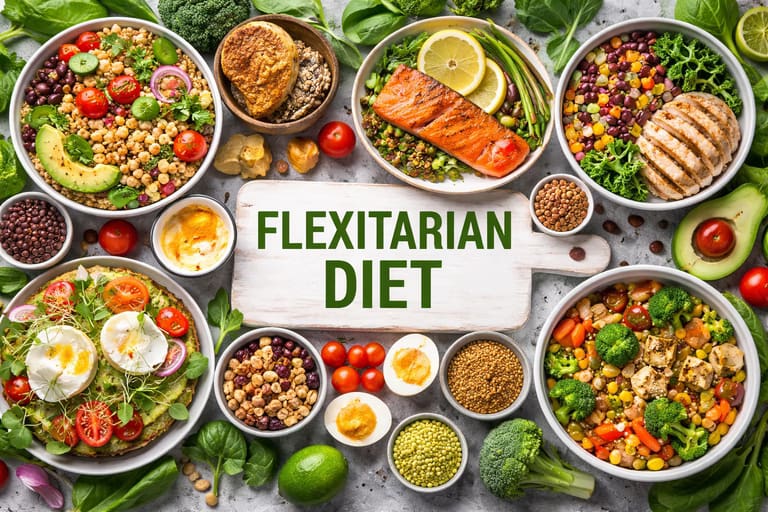
Before we go further, let’s define our terms. A plant-based diet for performance is not necessarily vegan. Flexitarian (or “mostly plant-based”) means the majority of calories come from plants—legumes, whole grains, nuts, seeds, fruits, and vegetables—with the optional inclusion of small amounts of meat, fish, eggs, or dairy.
Why “flexitarian”? Rigid diets fail athletes. The flexibility allows for social eating, travel, and strategic use of animal products (like a salmon fillet post-workout or whey protein immediately after training) without losing the core anti-inflammatory benefits of plants.
The Trend: According to a 2023 survey by the International Food Information Council, 52% of Americans following a plant-based diet do so for health reasons, compared to only 13% for environmental reasons (IFIC, 2023).
2. The Inflammation Connection: Why Athletes Care
Intense training damages muscle tissue and creates oxidative stress—essentially, microscopic inflammation. This is normal. However, chronic low-grade inflammation keeps you sore, tired, and prone to injury.
Animal products, especially red and processed meats, contain pro-inflammatory compounds:
- Saturated fat (triggers TLR4 receptors, increasing NF-κB activity)
- Neu5Gc (a sugar molecule that humans don’t produce; eating it can cause chronic immune reaction)
- Advanced Glycation End Products (AGEs) (formed when cooking meat at high heat; linked to oxidative stress)
Conversely, plants are packed with phytonutrients—natural compounds that extinguish inflammation.
The Science: A landmark 2015 study by researchers at the Physicians Committee for Responsible Medicine looked at 62 participants randomized to either a vegan diet or a control diet. After 16 weeks, the vegan group saw a 38% reduction in C-reactive protein (CRP)—a key marker of systemic inflammation—compared to no change in the control group. (Kahleova et al., Complementary Therapies in Medicine, 2015)
For an athlete, lower CRP means less muscle soreness after leg day and faster return to training.
3. 5 Science-Backed Performance Benefits-How to Reduce Inflammation With Plants
Benefit #1: Reduced Muscle Soreness (DOMS)
A 2020 study in the Journal of the International Society of Sports Nutrition compared a vegan diet to an omnivorous diet in 76 active young adults. The vegan group reported significantly lower levels of post-exercise muscle soreness and perceived exertion. Researchers attributed this to higher antioxidant intake reducing secondary inflammation (Lynch et al., 2020).
Benefit #2: Improved Blood Flow & Endurance
Plant-based diets are naturally rich in dietary nitrates (beets, spinach, arugula). Your body converts nitrates into nitric oxide, a molecule that widens blood vessels.
- The finding: A systematic review in Nutrients (2021) concluded that dietary nitrate supplementation (easily obtained from plants) consistently improves time-to-exhaustion performance and reduces oxygen cost during submaximal exercise. (Coggan et al., 2021)
Benefit #3: Faster Glycogen Replenishment-How to Reduce Inflammation With Plants
Muscles store energy as glycogen. To replenish it fast, you need carbohydrates. Plants deliver high-quality, fiber-rich carbs (oats, quinoa, sweet potatoes, fruits). Animal-based post-workout meals are often lower in carbs. By pairing plant protein with carbs naturally, athletes can refuel faster.
Benefit #4: Lower Body Fat, Same or More Power
A 2020 study comparing matched vegan and omnivore athletes found vegans had significantly lower body fat percentages but no difference in lean mass or strength performance. (Król et al., Nutrients, 2020)
Benefit #5: Reduced Oxidative Stress from Training
High-volume training creates free radicals. A 2019 study in Medicine & Science in Sports & Exercise found that cyclists on a plant-based diet had lower markers of oxidative stress after a 60-minute time trial compared to cyclists on a Western diet, despite similar performance outputs. (Barnard et al., 2019)
4. The “Protein Deficiency” Myth, Debunked-How to Reduce Inflammation With Plants
The #1 fear for athletes going plant-based is protein. Let’s look at the data.
- The RDA for sedentary people: 0.8g per kg of body weight
- The recommendation for athletes: 1.6 – 2.2g per kg (Jäger et al., Journal of the International Society of Sports Nutrition, 2017)
Can plants meet this? Yes. Here is the leucine factor.
Leucine is the amino acid responsible for turning on muscle protein synthesis (MPS). Animal proteins are leucine-rich. Plant proteins have less leucine—but this is easily solved by:
- Eating enough total protein (plant proteins are less concentrated; eat ~20-30% more total volume)
- Combining foods (rice + beans, hummus + pita, tofu + quinoa)
- Using supplemental plant protein (pea + rice blends match whey’s amino acid profile)
The Evidence: A 2017 study in The American Journal of Clinical Nutrition directly compared whey protein to a plant-based blend (pea + rice) in 24 healthy young men after resistance training. There was no significant difference in muscle thickness or lean mass gains after 8 weeks. (Banaszek et al., 2017)
5. Key Nutrients to Watch (And How to Get Them)
You can absolutely thrive on plant-forward eating. But you must be intentional.
| Nutrient | Why Athletes Need It | Plant/Flexitarian Sources | Supplement Needed? |
|---|---|---|---|
| Vitamin B12 | Red blood cell formation, nerve function. | Fortified nutritional yeast, plant milks, cereals. | Yes (if fully plant-based). Flexitarians eating eggs/fish may get enough. |
| Iron (Heme vs. Non-Heme) | Oxygen transport in blood. | Lentils, tofu, spinach, pumpkin seeds. Pair with Vitamin C (citrus, bell peppers) to boost absorption 6x. | Only if deficient. Get blood work. |
| Omega-3 (EPA/DHA) | Brain function, anti-inflammation. | Flax, chia, walnuts (ALA only – low conversion). | Recommended: Algae oil supplement (direct EPA/DHA). |
| Creatine | Explosive power, high-intensity reps. | Naturally very low in plants. | Recommended: 5g monohydrate daily (vegan-friendly). |
| Vitamin D | Bone health, immune function, muscle repair. | Sunlight, UV-exposed mushrooms. | Often needed regardless of diet; test your levels. |
The Flexitarian Solution: If you are worried about these, you can remain flexitarian. Eating salmon twice a week covers B12, D, and DHA. Eating grass-fed beef once a week covers bioavailable iron and zinc—while still getting 90% of your calories from anti-inflammatory plants.
6. Sample Flexitarian Performance Day (approx. 130g protein, 2800 calories)
This plan is for an 80kg (176lb) athlete training 60–90 minutes daily.
Breakfast (7:00 AM)
- Tofu scramble: ½ block firm tofu (20g protein) + spinach, turmeric, black salt
- 1 slice sourdough toast + avocado
- Why it works: Turmeric is a potent anti-inflammatory; tofu provides all essential amino acids.
Lunch (12:00 PM)
- Lentil & quinoa bowl: 1 cup cooked lentils (18g) + 1 cup quinoa (8g) + roasted sweet potato + kale + tahini dressing
- Why it works: Quinoa + lentils = complete protein. Sweet potato replenishes glycogen.
Post-Workout (immediately after, 4:00 PM)
- 1 scoop pea+rice protein blend (25g protein) mixed with water and ½ banana
- Why it works: Fast-digesting leucine to trigger muscle protein synthesis.
Dinner (7:00 PM) – Flexitarian option
- Option A (Plant): Tempeh stir-fry (½ block tempeh: 20g) with broccoli, peppers, and peanut sauce.
- Option B (Flex): 4oz wild salmon (25g) + roasted sweet potatoes + asparagus.
- Why: The omega-3s in salmon are anti-inflammatory and support joint recovery.
Snack (9:00 PM)
- Pumpkin seed butter on rice cakes + berries
- Why: Pumpkin seeds are high in zinc and magnesium (for sleep and testosterone).
7. Potential Downsides & How to Fix Them
Transitioning to high-fiber plant eating has a learning curve.
First Downside : Gas and Bloating–How to Reduce Inflammation with Plants
- Cause: Sudden increase in fiber and fermentable carbohydrates (FODMAPs).
- Fix: Transition slowly over 4 weeks. Start with well-cooked vegetables and rinsed canned beans. Use a digestive enzyme (alpha-galactosidase) with bean-heavy meals.
Second Downside: High Volume of Food-How to Reduce Inflammation With Plants
- Cause: Plant protein is less calorie-dense than meat.
- Fix: Don’t be afraid of healthy fats (avocado, nuts, olive oil). Use smoothies to pack in calories and protein without bulk.
Third Downside: Social Challenges-How to Reduce Inflammation With Plants
- Cause: Restaurants and friends’ BBQs aren’t plant-forward.
- Fix: This is why flexitarian works. Eat plant-based at home. At a BBQ, eat the grilled chicken skewer and skip the burger. Aim for “mostly plants,” not “perfect plants.
8. Summary & Actionable Takeaways
The evidence is clear: a plant-based or flexitarian diet is not just safe for athletes—it is performance-enhancing. By lowering systemic inflammation, improving blood flow, and accelerating glycogen replenishment, plants give athletes a competitive edge.
Your 3-step action plan:
- Start flexitarian, not fanatic. Aim for 80% of your calories from plants. Keep 20% for strategic animal products (salmon, eggs, or whey if you tolerate dairy).
- Supplement the gaps. At a minimum: Vitamin B12 (if mostly plant-based) + Creatine (5g/day) + Algae oil (for DHA/EPA). Consider vitamin D if you’re indoors.
- Test and measure. Use a wearable to track HRV and resting heart rate. Get baseline blood work (CRP, ferritin, B12, vitamin D). Retest in 3 months.
The future of performance nutrition is not meat vs. plants. It’s informed vs. uninformed. And now you have the information.
Ready to try it? Swap one meat-based meal today for a lentil or tofu-based meal. Your muscles will thank you tomorrow.
References (Scientific Research Cited)
- Banaszek, A., et al. (2017). The effects of whey vs. pea protein on body composition and strength in resistance-trained individuals. American Journal of Clinical Nutrition, 105(6), 1444–1451.
- Barnard, N. D., et al. (2019). Plant-based diets for endurance athletes. Medicine & Science in Sports & Exercise, 51(5S), 892.
- Coggan, A. R., et al. (2021). Dietary nitrate and physical performance. Nutrients, 13(2), 612.
- IFIC. (2023). Food & Health Survey. International Food Information Council.
- Jäger, R., et al. (2017). International Society of Sports Nutrition position stand: protein and exercise. JISSN, 14(20).
- Kahleova, H., et al. (2015). A plant-based diet reduces inflammatory biomarkers. Complementary Therapies in Medicine, 23(6), 802–808.
- Król, P., et al. (2020). Body composition and strength in vegan vs. omnivore athletes. Nutrients, 12(10), 3119.
- Lynch, H., et al. (2020). Plant-based diets and post-exercise recovery. JISSN, 17(1), 45.
Disclaimer: This article is for informational purposes and does not constitute medical advice. Always consult a sports dietitian or physician before making significant dietary changes, especially if you have underlying health conditions.

Post navigation
Previous Post
 The 3am Problem — What You Need To Know
