


Introduction
The 3am Problem-What You Need To Know. Why millions of people wake up anxious in the middle of the night, what’s actually happening in their brain, and why nobody has built a real solution yet.
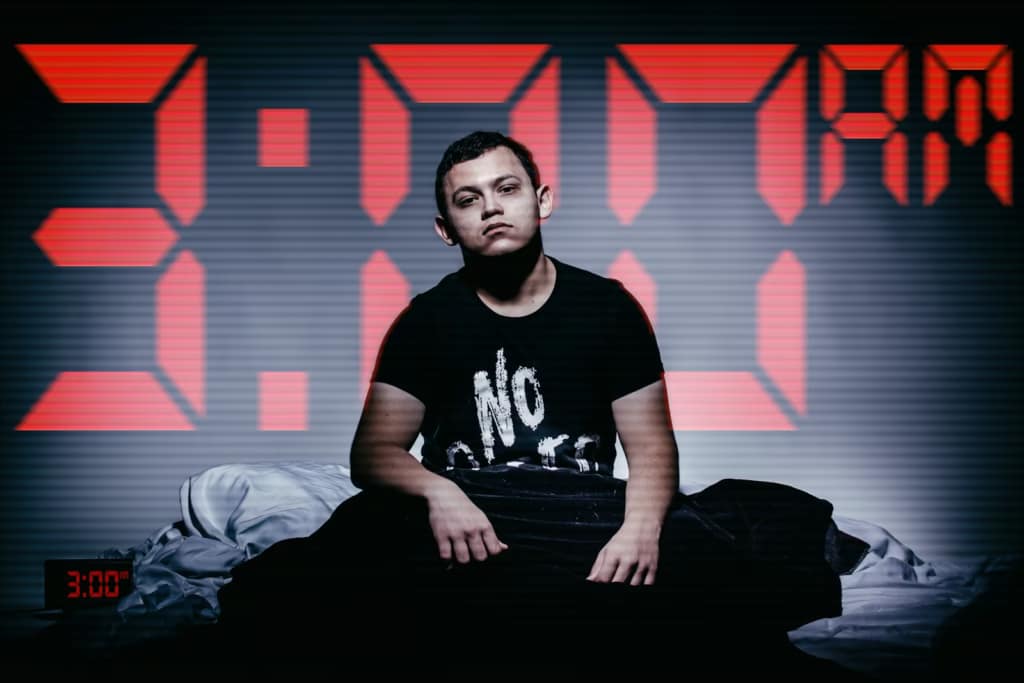
You know the feeling. It’s 3am. The room is dark and quiet, and by every measure you should be asleep. But your brain has other plans.
First, maybe it’s a work crisis that won’t stop replaying. Secondly, it may be it’s finances, a relationship, a decision you made three years ago that suddenly feels catastrophic. Thirdly, maybe you don’t even know what it is, just a low hum of dread that pins you to the ceiling of your own mind.
First, you reach for your phone. Next, you scroll. An hour passes. You sleep for forty minutes before your alarm goes off.
To begin with, this happens to millions of people, across every age group, every income bracket, every walk of life. In addition, it’s one of the most common experiences in modern human existence. Lastly, there is still no good solution for it.
That’s not an exaggeration. There is genuinely nothing on the market designed specifically for the moment you wake up anxious at 3am. For this reason, this article explores why that moment is so uniquely brutal, why it has gone unsolved for so long, and what a real fix might actually look like.
The Science: Why 3am Is the Worst Time to Have a Brain-The 3am Problem — What You Need To Know

The 3am anxiety spike isn’t random. It’s the product of several biological processes converging at exactly the wrong time
To begin, cortisol starts rising. Your body begins preparing for the day in the early hours of the morning, releasing cortisol to bring you toward wakefulness. But this process starts several hours before you need to be awake, triggering alertness and low-level stress responses while you’re still trying to sleep.
Next, blood sugar is at its lowest. After hours without food, your glucose levels have dropped. The brain interprets this as a mild threat signal, adding a layer of physiological anxiety on top of whatever you’re already thinking about.
Then, core body temperature hits its floor. This correlates directly with mood. The coldest point of your body temperature cycle, usually around 4am, is also the point at which emotional resilience is at its weakest.
Furthermore, the prefrontal cortex is underactive. This is the key one. The prefrontal cortex is the part of your brain responsible for rational thought, perspective, and emotional regulation. It is suppressed During night wakings. Meanwhile, the amygdala, your brain’s threat detection system, is hyperactive.
In fact, the result is that you have full, unfiltered access to every fear you’ve ever had. To make things worse, there is almost none of the cognitive tools you’d normally use to manage them. The same thought that feels manageable at 2pm feels genuinely catastrophic at 3am. You’re not being irrational. The fact is that, you’re operating with a neurologically compromised brain that is physically primed to perceive threats.
For this reason, understanding this changes how you think about the problem. It means, it’s not a willpower issue. Neither, is it about being anxious or weak. Simply put, it’s a predictable biological state that millions of people enter every single night, with no real support available when they do.
Who It Affects:The 3am Problem – What You Need To Know
One of the reasons this problem has stayed under the radar is that it looks different for everyone, and nobody talks about it openly. But the numbers are striking.
It has been discovered that roughly, one in three adults experiences regular night waking. Among those, a significant proportion report anxiety as the primary cause. When you start mapping the specific groups most affected, it becomes clear this isn’t a niche issue — it’s a near-universal human experience.
First among them are parents of young children. These are already sleeping in fragments. The anxiety that surfaces during those fragments tends to be intense like financial pressure, performance at work, and whether they’re doing enough for their kids.

Next, are the Perimenopausal and menopausal women. They experience hormonal shifts that trigger night sweats and cortisol spikes. This creates a physiological perfect storm of waking and anxiety that can last for years.
After that, are the High-stress professionals. They spend their days suppressing worry in order to function. That suppressed material doesn’t disappear. It resurfaces the moment conscious control relaxes. This is exactly what happens during sleep.

Following them, are People with anxiety disorders. These include the generalized anxiety disorder such as PTSD, and OCD. They experience their most intense symptoms during unstructured nighttime hours, when there are no distractions and no way to outrun their thoughts.
Next, are Teenagers and young adults. They carry enormous pressure around academic performance, social belonging, and identity. This gives them few healthy outlets and limited emotional vocabulary to process it.
Last but not the least, are the People in the middle of major life transitions. These are those who are passing through divorce, job loss, bereavement, and relocation. They find that the enormity of change they’ve managed to hold at bay during the day arrives in full force at 3am.
The common thread is not a specific demographic. It’s anyone going through something hard, which at any given time is most of us.
What People Do – And Why It Doesn’t Work: The 3am Problem — What You Need To Know
When you wake up anxious at 3am, you have a small menu of options. None of them are particularly good.
You begin by scrolling your phone, which is the most common response, for obvious reasons. It is simply because it’s easy, it’s immediately distracting, and it requires no decisihttps://kwamzworld.com/secrets-of-better-sleep-with-sleep-trackers
on-making. It also exposes you to blue light that suppresses melatonin. Its stimulating content keeps the brain alert, and the passive scroll can silently extend your awake window by 45 to 90 minutes. People know all of this, however, they do it anyway, because lying alone with their thoughts feels worse.
Next is putting on television or a podcast. This provides background noise and mild distraction, but keeps the brain in a semi-alert state. Sleep, when it eventually comes, is lighter and less restorative.
Another one is trying to think your way out — “I know I shouldn’t be worried about this, it’s fine, everything is fine.” It is one of the most well-documented failures in anxiety management. Cognitive suppression, especially when the prefrontal cortex is already weakened, causes the suppressed thought to rebound with greater intensity. The brain doubles down.
Going further down the list are Meditation apps. These are a reasonable instinct, but they’re designed for a different problem. The Calm and Headspace are wind-down tools. They work when you’re still in control, still relatively calm, and still choosing to be present. However, at 3am, the activation energy required to open an app navigate to a session, and sustain attention for twenty minutes is often simply too high. In short, the medium doesn’t fit the moment.
Next, is Journaling. It is another evidence-based anxiety management tool which requires turning on a light, finding materials, and being coherent enough to write. For most people, in the middle of the night, this isn’t realistic.
Lastly, Getting out of bed. It is the classic advice from sleep hygiene experts. It does work, however, it’s cold, lonely, and disruptive. For this reason, most people resist it.
The overwhelming majority of people simply lie there. They oscillate between almost-asleep and fully awake for one to three hours, running the same loops, before finally drifting off minutes before they need to get up. This is the most common outcome. And it happens night after night.
What Exists Clinically – And Why It Doesn’t Reach the Moment
The clinical world has real solutions for chronic insomnia and anxiety-related sleep disruption.
First on the list is Cognitive Behavioral Therapy for Insomnia, or CBT-I, is the gold-standard treatment for chronic insomnia. Studies consistently show it outperforms medication for long-term outcomes, with no dependency or side effects. But it requires six to eight weeks of structured sessions with a trained therapist. This can cost hundreds to thousands of dollars, depending on access, and is available only during business hours. It addresses the underlying pattern — not the moment you’re lying awake at 3am right now.
The next is Sleep medications, which include Ambien, Lunesta, and their equivalents. These medications are prescribed widely and they are genuinely effective for some people. However, they also carry real risks, which include dependency, morning grogginess, cognitive impairment, and no treatment of the underlying anxiety.

Melatonin helps with sleep onset. It has minimal effect on mid-night wakings caused by anxiety.
Therapy of various forms can address the root causes of chronic anxiety over time. But there is no form of therapy that intervenes in the acute 3am moment.
The gap is not between good clinical options and bad clinical options. The gap is between the clinical world, which operates in sessions, over weeks, during daylight hours, and the specific physiological and psychological reality of 3am. That gap is completely unoccupied.
What a Real Solution Requires–The 3am Problem — What You Need To Know
Designing something for the 3am moment means accepting a set of constraints, unlike almost any other product category.
The person using it is semi-conscious. Firstly, their cognitive capacity is significantly reduced. Secondly, they are emotionally activated and likely in some distress. Thirdly, they are in the dark. Fourthly, they do not want to turn on a light. Lastly, they are not willing, and in many cases not able to do anything that requires sustained attention or sequential decision-making.
A real solution for this moment has to be:The 3am Problem-What You Need To Know
Firstly, Zero activation energy. It must begin with a single word, a single tap, or a single gesture. No unlocking, no navigating, no choosing a mode. Any friction between the decision to use it and the experience beginning will cause people to reach for their phone instead.
Next, Immediately responsive. Not a pre-recorded script. Not a generic breathing exercise. Something that actually hears what you’re spiraling about and responds to that specific thing. This is where AI becomes genuinely relevant — not as a buzzword, but as the only technology that can provide real-time, adaptive, personalised responses at scale.
Third is Audio-only. No screens. No light. The interface should work entirely through voice and sound, compatible with eyes closed and a partner sleeping next to you.
Next is Grounding before sleep. The goal of the first five minutes is not sleep but to interrupt the spiral. Somatic awareness techniques (noticing your feet, your breath, the weight of the duvet) are among the most effective ways to bring a person out of their thoughts and into their body. Once the spiral is interrupted, the path back to sleep opens.
Last is Thought containment, not suppression. One of the most important features any solution in this space could offer is what might be called “thought parking.” The brain resists letting go of an anxious thought because it hasn’t been handled well. If a tool can say genuinely and credibly, “I’ve recorded that worry, and it will be waiting for you in the morning,” it gives the brain permission to release it. This isn’t a trick. It is grounded in how memory consolidation and anxiety actually function.
Short. Five to twelve minutes. Not a course, not a programme. One moment, handled well, and then back to sleep.
Finally, The Opportunity Nobody Has Taken–The 3am Problem – What You Need To Know
A product built around these principles — call it Still, or something like it — would sit at the intersection of the sleep health industry, the mental health space, and the rapidly maturing field of AI companionship. Each of those industries is large and growing. However, their overlap is almost completely unoccupied.
The business case is straightforward: tens of millions of people experience this problem regularly, existing solutions don’t address it, and the willingness to pay for genuine relief from a nightly experience this misery is high. At the price of a couple of coffees a month — below Netflix, far below therapy — a large addressable market becomes very accessible.
But beyond the market logic, there’s something more fundamental here. Sleep disruption caused by anxiety has measurable downstream effects on physical health, mental health, relationships, and work performance. It’s one of those quiet, invisible problems that compounds over months and years into something much larger. The person lying awake at 3am is not just losing sleep.
The 3am moment is one of the loneliest experiences in modern life. Life becomes unbearable, when you’re surrounded by a sleeping world, held hostage by your own mind, and there is nothing designed to help you.
That gap exists. And one day, something will fill it.
If this resonated, you probably know someone who needs to read it. The experience of 3am anxiety is far more common than people admit — partly because it happens in the dark, alone, and partly because we don’t have a good language for it yet. Sharing this is a small way of saying: you’re not alone!

Post navigation
Previous Post
 How to Fix the Effects of Stress on Your Body
