

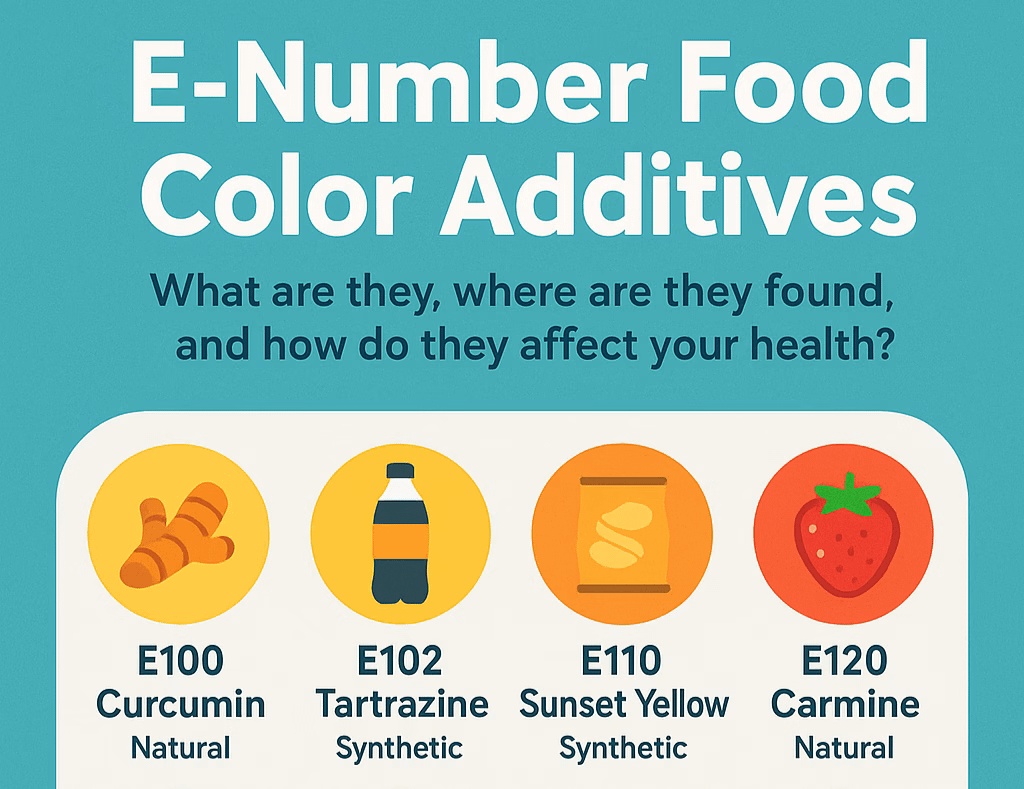

E-Number Food Color Additives You Should Know About: Full Guide to E-Number Food Color Additives: What They Are, Where They’re Found, and How They Affect Your Health.
Author: Kwamzworld Health & Fitness Hub
🔥 Introduction: What Exactly Are E-Number Food Colors?
Food today is brighter, bolder, and more colorful than ever before. But behind those attractive colors lies a system of codes known as E-numbers—labels used in Europe and many countries to identify food additives, especially colors.
On Kwamzworld, we care about clean, research-based health information. So, we created this complete, easy-to-understand guide to help you identify which color additives are safe, which ones to watch, and which ones might harm your body.
Here is a A complete guide to E-number food color additives (E100–E199). Learn what each additive is, the foods they appear in, and their possible health effects. Stay informed and protect your health with this in-depth Kwamzworld analysis.
Let’s break down every E-number color from E100 to E199—including where they’re found and their effects on your health.
🌿E100–E109: Natural Yellow Colorants-E-Number Food Color Additives You Should Know About
E100 – Curcumin
- Found in: Mustard, rice mixes, soups
- Health: Anti-inflammatory; high intake may upset stomach
E101 – Riboflavins-E-Number Food Color Additives You Should Know About
- Found in: Cheese, cereals, baby foods
- Health: Safe; extra may turn urine bright yellow
E102 – Tartrazine
- Found in: Soft drinks, jellies, candies
- Health: May cause hyperactivity and allergies
E104 – Quinoline Yellow
- Found in: Drinks, sauces
- Health: Behavioral concerns; banned in US & Japan
E107 – Yellow 2G-E-Number Food Color Additives You Should Know About
- Found in: Rare today, formerly drinks
- Health: Allergy risks; fully banned in EU
🟠 E110–E129: Synthetic Orange, Red & Yellow Dyes
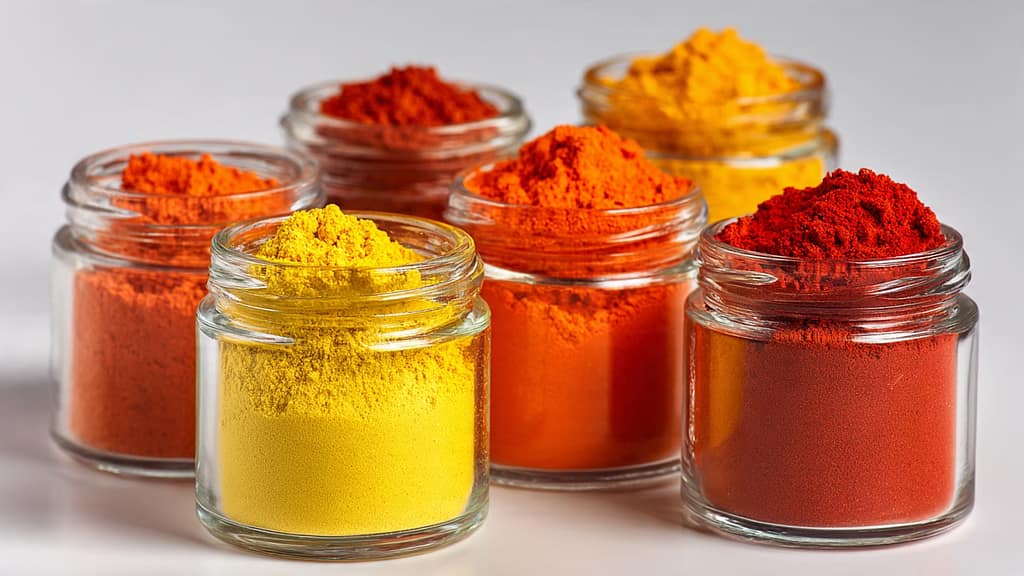
E110 – Sunset Yellow
- Found in: Chips, jellies, cereals
- Health: Hyperactivity concerns & rare allergies
E111 – Orange GGN (banned)
E120 – Carmine (Natural Red 4)
- Found in: Yogurt, juices, candies
- Health: Strong allergen for some individuals
E121 – Citrus Red 2
- Found in: Orange peel dye
- Health: Carcinogenic concerns; heavily restricted
E122 – Carmoisine
- Found in: Jams, cakes
- Health: Linked to hyperactivity
E123 – Amaranth
- Found in: Drinks, dessert toppings
- Health: Carcinogenic concerns; banned in US
E124 – Ponceau 4R
- Found in: Bakery, canned fruits
- Health: Allergy & behavior concerns
E127 – Erythrosine
- Found in: Candied cherries
- Health: Thyroid issues at high doses
E128 – Red 2G (banned)
E129 – Allura Red
- Found in: Drinks, cereals, gummies
- Health: May affect child behavior
🔵 E130–E150: Blues, Greens, Browns & Blacks
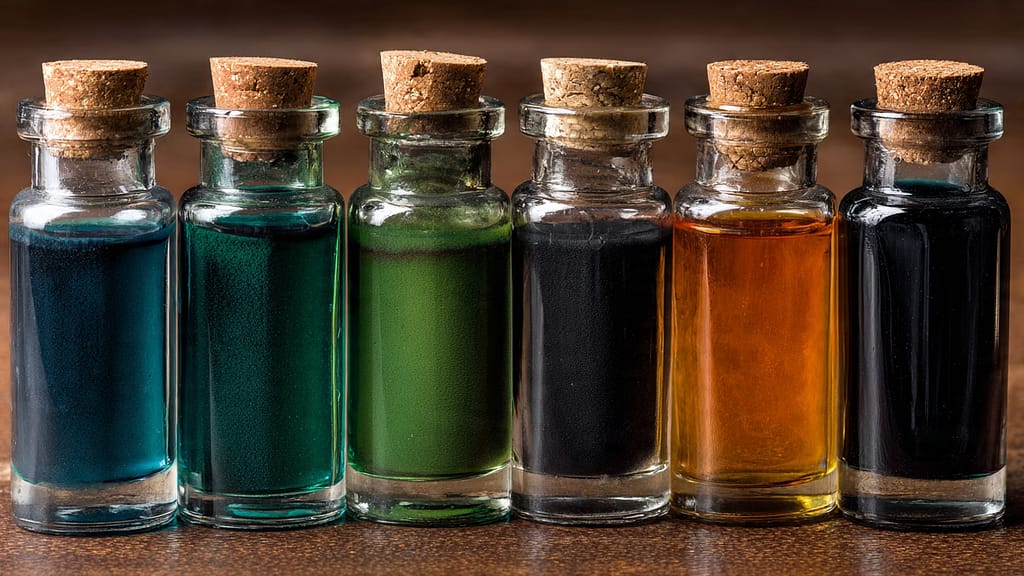
E131 – Patent Blue V
- Found in: Candies, desserts
- Health: Allergic reactions in sensitive people
E132 – Indigo Carmine
- Found in: Ice cream, drinks
- Health: Mild allergy risk
E133 – Brilliant Blue
- Found in: Beverages, popsicles
- Health: Generally safe within limits
E140 – Chlorophyll
- Found in: Mint sweets, supplements
- Health: Very safe
E141 – Chlorophyll–Copper Complex
- Found in: Cheese, canned peas
- Health: Safe; caution for liver-sensitive individuals
E142 – Green S
- Found in: Sweets, canned peas
- Health: Allergy concerns; banned in US/Japan
E150a–E150d – Caramel Colors
- Found in: Sodas, sauces, coffee drinks
- Health: E150d may contain 4-MEI (carcinogenic in high levels)
E151 – Brilliant Black BN
- Found in: Licorice, desserts
- Health: Allergy risk; restricted in several countries
E153 – Vegetable Carbon
- Found in: Black breads, ice creamE160–E170: Natural Carotenoids & Colorants
- Health: May reduce absorption of medications
❤️E160–E170: Natural Carotenoids & Colorants-E-Number Food Color Additives You Should Know About
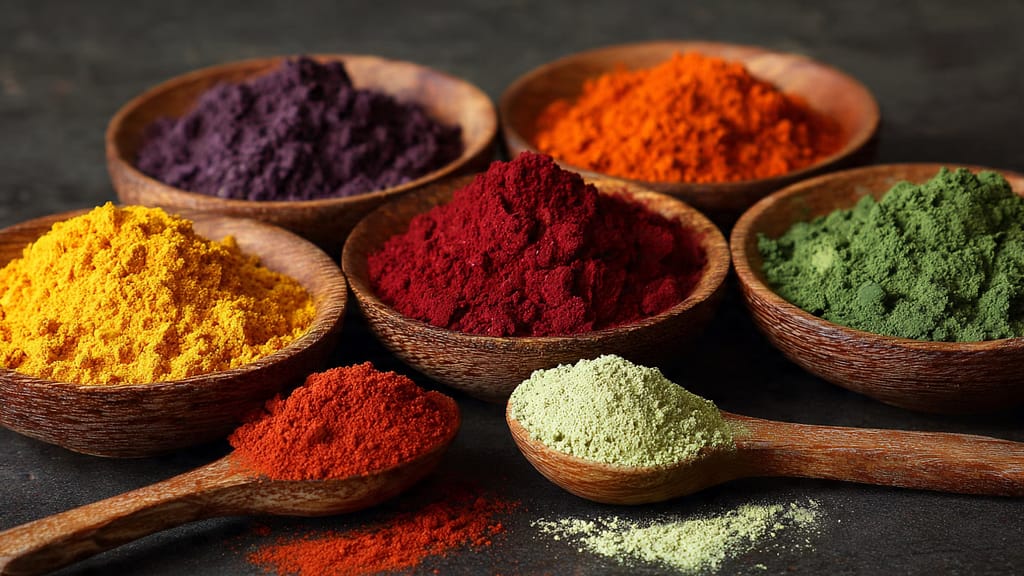
E160a – Beta-Carotene
- Found in: Margarine, juices
- Health: Safe; supplements risky for smokers
E160b – Annatto
- Found in: Cheese, snacks
- Health: Can cause rare allergic reactions
E160c – Paprika Extract
- Found in: Meats, soups
- Health: Safe; anti-inflammatory
E160d – Lycopene
- Found in: Tomato-based foods
- Health: Powerful antioxidant
E161a–E161g – Xanthophylls
- Found in: Eggs, fish feed, margarine
- Health: Safe; canthaxanthin supplements may affect eyes
E162 – Beetroot Red
- Found in: Ice cream, yogurt
- Health: Safe; pink urine possible
E163 – Anthocyanins
- Found in: Berries, drinks
- Health: Beneficial antioxidant
E170 – Calcium Carbonate
- Found in: Chewing gum, hard sweets
- Health: Safe
⚠️ E171 – Titanium Dioxide (The Controversial One)
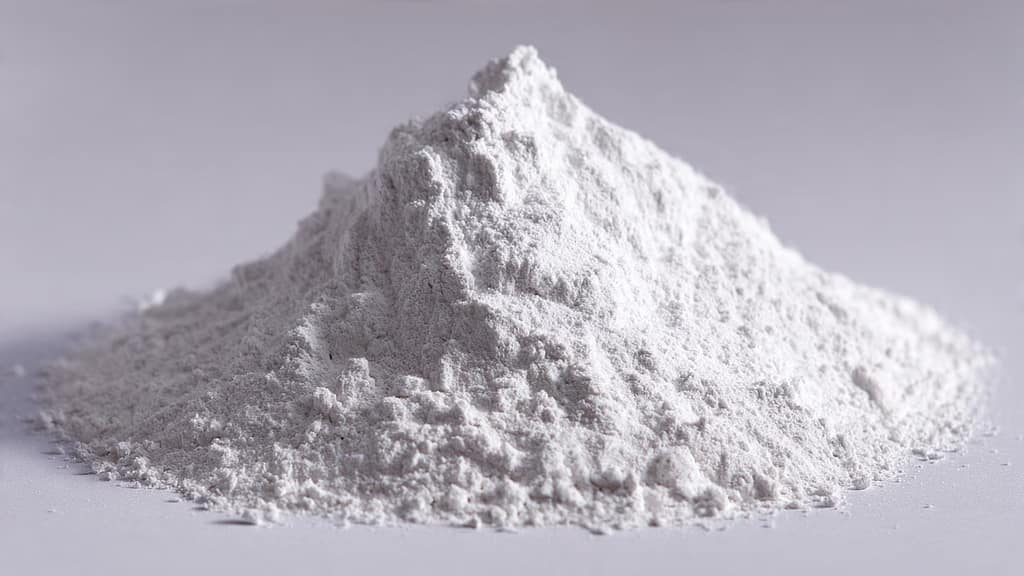
Found in:
Chewing gum, white icing, candies, sauces, chocolates
Health Effects: E-Number Food Color Additives You Should Know About
- Possible DNA damage
- May accumulate in organs
- Banned in the EU since 2021
- Still allowed in the U.S.
This is the most criticized additive in modern food safety discussions.
⚪E172–E175: Metallic Colorants-E-Number Food Color Additives You Should Know About

E172 – Iron Oxides
- Found in: Chocolate coatings, bakery decorations
- Health: Mostly safe
E173 – Aluminum
- Found in: Confectionery decorations
- Health: Neurotoxicity at high levels
E174 – Silver
- Found in: Luxury desserts
- Health: Overuse may cause argyria (blue-gray skin)
E175 – Gold
- Found in: Chocolate, luxury pastries
- Health: Safe at decorative levels
🔴 E180 – Lithol Rubine BK
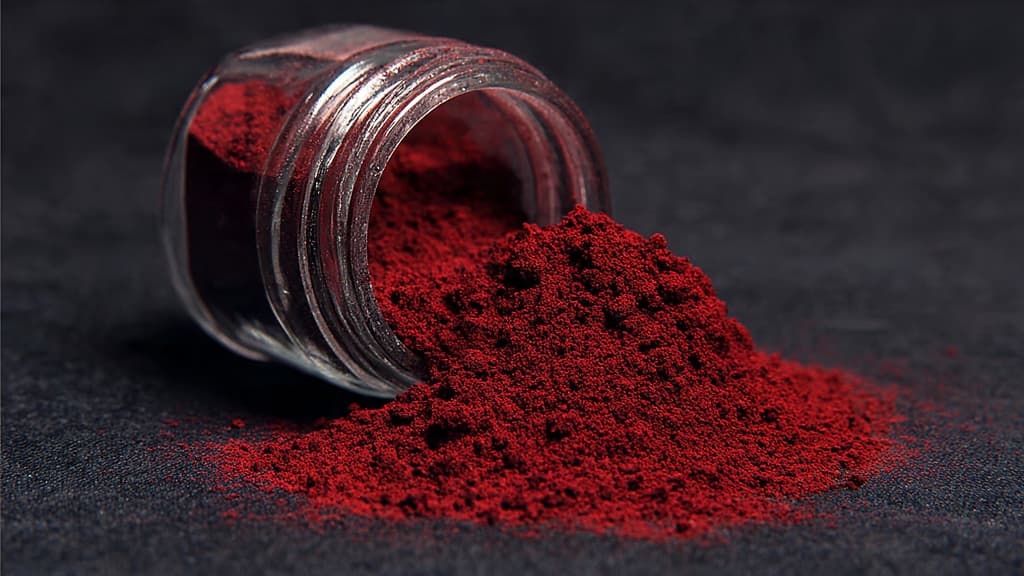
- Found in: Cheese rinds
- Health: Minor allergies; banned in some regions
📌 Summary: Which E-Numbers Should You Limit?
To protect your health:
Be cautious with:
- E102, E110, E122, E123, E124, E129 → linked to hyperactivity
- E127 → thyroid concerns
- E150d → possible carcinogenic byproducts
- E171 → banned in EU for safety concerns
Safe and natural choices:
- E100, E101, E140, E160 series, E162, E163
Best rule of thumb:
The more colorful and processed a food is, the more likely it contains synthetic dyes.

Post navigation
Previous Post
 Did You Know Journaling Boots Cognitive Performance?
